It happened to us. A well-known, highly respected publication told us they loved our client’s product. Great fit for their audience. Compelling story. The kind of placement you work months to land.
And then they passed.
Not because the product wasn’t good enough. Not because the pitch was off. But because our client didn’t have an affiliate link they could pull from.
If you work in public relations and that story doesn’t stop you in your tracks, it should. Because it’s not an isolated incident. Instead, it’s a sign of how fundamentally the media landscape has shifted. And if publicists and brand marketers are not paying attention, we’re leaving placements on the table.
Here are the top tips every PR professional needs to understand about affiliate marketing right now.
1. PR and Affiliate Marketing Are More Alike Than You'd Expect
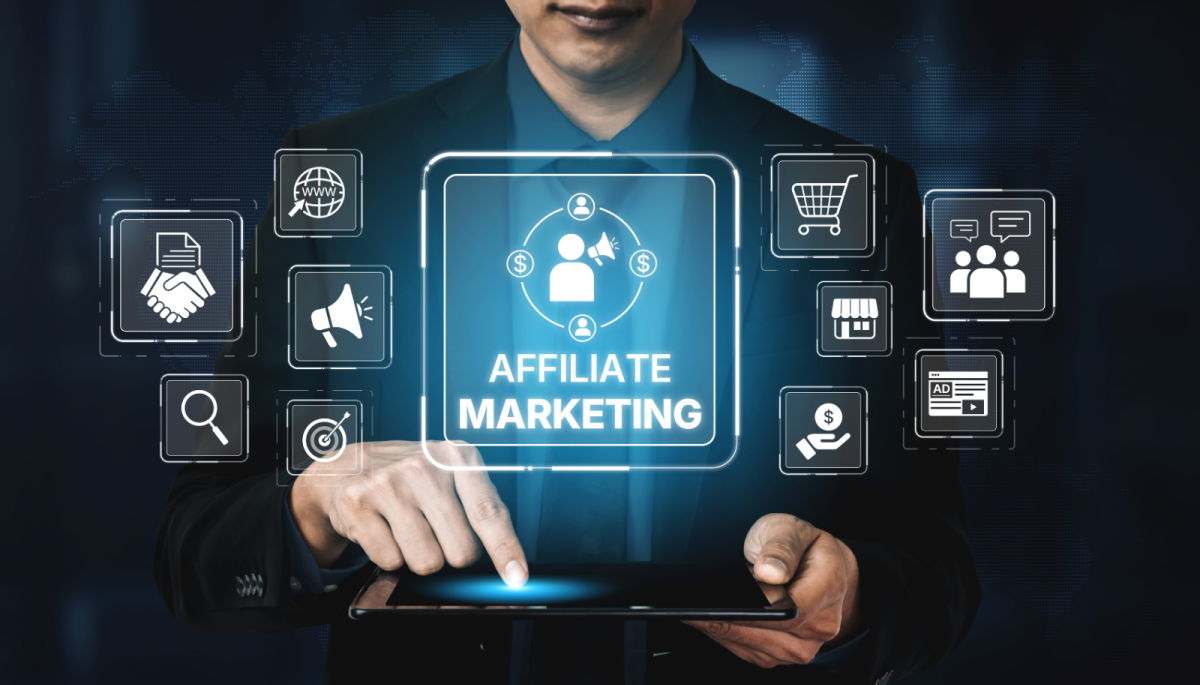
Here’s the simplest way to think about affiliate marketing: it’s performance-based media. A publisher, whether that’s a media outlet, a newsletter, an influencer, or a product review site — places a unique tracking link in their content. When a reader clicks that link and buys something, the publisher earns a commission. Your brand only pays when something measurable actually happens.
If that sounds a lot like what we already do in PR, that’s because it is. We pitch. We build relationships. We secure coverage. We help brands earn trust with new audiences. Affiliate marketing is built on the exact same principles; it just has a revenue trail attached.
2. Media Companies Are Already All In
Here’s a number worth sitting with: Wirecutter, the product review site owned by The New York Times, has become one of the most powerful affiliate publishers in the world. In their Q4 2024 earnings call, the NYT reported that “other revenues,” led by Wirecutter affiliate referrals jumped 16% year-over-year. Industry analysts estimate Wirecutter alone generates upwards of $6 - $10 million per month in affiliate commissions.
And they’re far from alone. Forbes, Condé Nast, BuzzFeed, are all major affiliate publishers, earning significant revenue from the editorial content. The affiliate link is simply what connects their recommendation to the revenue.
This isn’t the future of media. It’s the present. And it directly can affect how these outlets make editorial decisions about your company’s products.
3. No Affiliate Link? No Placement
When a media outlet monetizes its content through affiliate links — and many major ones now do — a product without an affiliate program creates a real problem for them. They can write about it. But they can’t earn from it. And in a media environment where every media outlet is looking for sustainable revenue, that matters more than ever.
As mentioned in our intro, we experienced this firsthand. A media outlet we had a strong relationship with, one that genuinely liked our client’s product, couldn’t include it because there was no affiliate link available. The product was great. The fit was right. But without a program in place, the door was closed.
And it’s not just editorial placements. Think about the last time you Googled “best running shoes” or “top air fryers under $100.” Those numbered lists with “Buy on Amazon” buttons? Affiliate links. The “Check Price” button on a review site? Affiliate link. The newsletter recommendation from your favorite creator? Almost certainly an affiliate. This is how content monetization works now and it’s happening across every category and every platform your company likely cares about.
4. The Market Is Bigger Than You Might Think
Global affiliate marketing spend hit $18.5 billion in 2024 and continues to grow. More than 80% of brands now treat affiliate marketing as a core part of their revenue strategy — not a nice-to-have, but a must-have.
Here’s another stat that should get your attention: affiliate campaigns deliver an average return on ad spend of 12:1.
Which means your company or brand almost certainly has an affiliate program, are building one, or should be.
5. Some Brands Are Doing This Really Well

The brands winning at affiliate marketing are using it the same way great PR teams use earned media — to build trust, drive coverage, and create relationships that keep paying off. Below are examples of some brands leveraging affiliate in their brand marketing efforts.
Glossier built its brand almost entirely on earned media and word-of-mouth before layering in affiliate. By 2018, 80% of their sales came through peer referrals with virtually no traditional advertising spend. When they formalized that with their ambassador program — giving fans unique promo codes and commissions — 8% of online sales became directly tied to ambassador activity alone.
AG1 mastered something every PR pro will recognize: getting credible voices to recommend a product in their own words to highly engaged audiences. Podcast hosts like Tim Ferriss and Andrew Huberman talked about AG1 as part of their personal routines — editorial in feel, affiliate in structure. AG1’s 20% commission rate keeping creators motivated to keep mentioning it.
And don’t overlook holiday gift guides. This is where it gets very real for your brand. Major outlets like Oprah Magazine, BuzzFeed, and the New York Times now largely prioritize products with affiliate links when building their lists because the links provide direct financial incentive for the feature. “Are you on an affiliate program?” has become a standard part of the editorial evaluation process. A great product without one is a harder sell than a great product with an affiliate program.
6. Affiliate Tracking Solves PR’s Oldest Problem: Attribution
Here’s one of the most persistent frustrations in our industry: we secure meaningful coverage, but it’s nearly impossible to show how a top-tier placement results in sales. You can point to timing, to sentiment, to share of voice. But a direct, dollar-for-dollar connection between earned media and revenue? Good luck.
Affiliate links change that. When a media outlet includes a tracked link in an article about your product, every click and every resulting purchase is attributed directly back to that source. You can see exactly how much revenue that placement generated — not estimated, not inferred. Measured.
For PR professionals, this is a gamechanger. It’s the ability to walk into a client meeting and say: that placement drove real, trackable revenue last month. That’s the kind of accountability our industry has always wanted, and affiliate marketing finally makes it possible.
7. Your PR-to-Affiliate Checklist: What to Think About Right Now
You don’t need to become an affiliate expert overnight. But here are the questions worth asking for every B2C product your company sells.
• Does your brand have an affiliate program? Find out before your next pitch. If they do, know which network they’re on (Impact, CJ, Rakuten, Amazon and ShopMy are the big ones), what commission they offer, and how publishers can join.
• Are the media outlets you’re targeting affiliate publishers? Many major outlets are. Knowing this changes how you position the pitch.
• Is the commission rate competitive? A too-low commission can be just as much a barrier as having no program at all.
• Is your client’s product available on Amazon? If so, Amazon Associates links are the path of least resistance for many publishers, so make sure the product listing is optimized.
• Think quality over quantity. One well-placed affiliate link in a trusted publication outperforms dozens of low-authority placements. The same editorial judgment you apply to media targeting applies here.
The Bottom Line
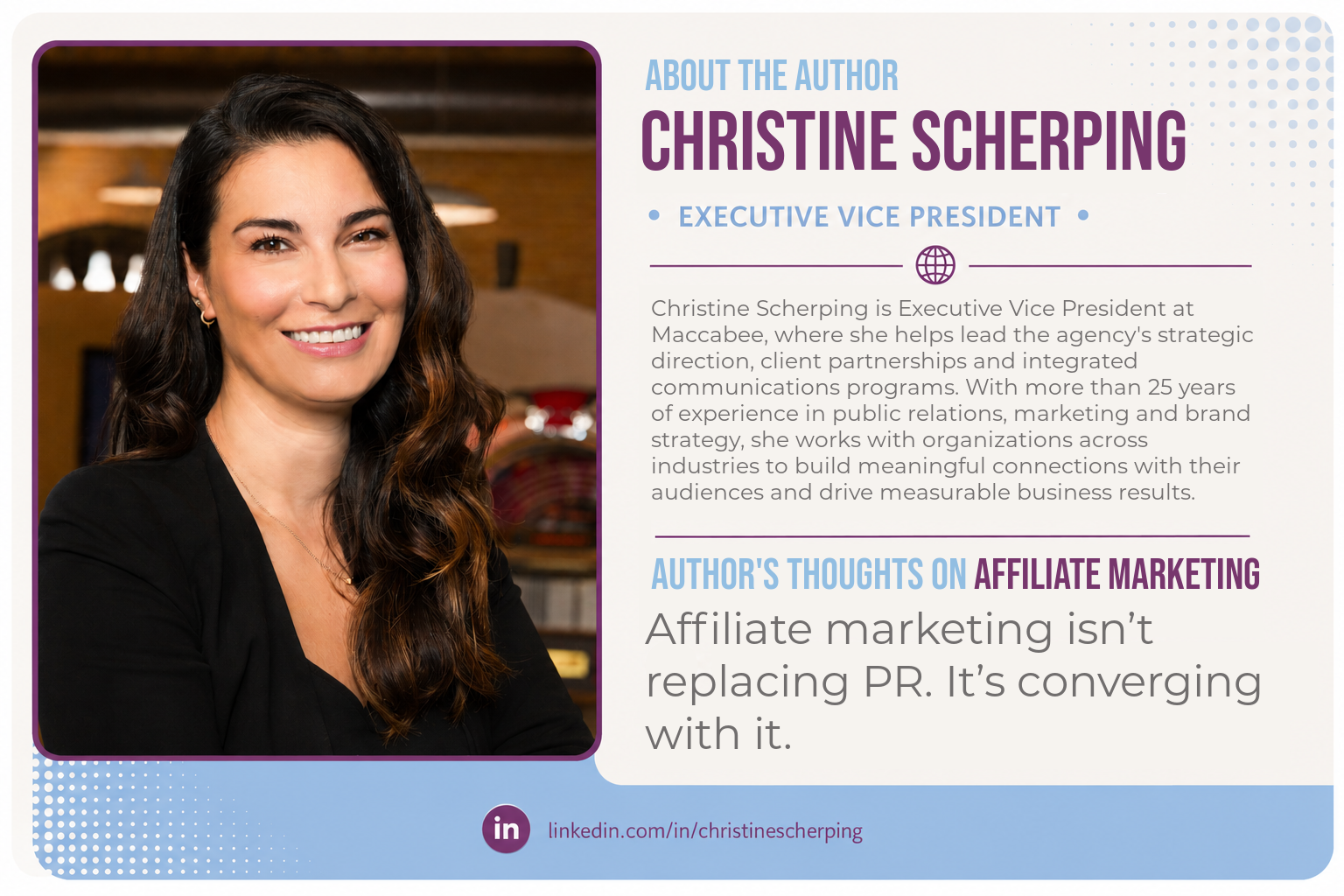
Affiliate marketing isn’t replacing PR. It’s converging with it.
The media outlets we pitch are increasingly thinking about content through a revenue lens. The product campaigns our agency designs are increasingly being evaluated on performance metrics, not just brand awareness. And the tools now exist to connect your product’s editorial coverage directly to measurable business outcomes.
Look back at the beginning of this blog post - my story about losing a placement because our client didn’t have an affiliate link? That’s not happening again. And we don’t want it to happen to you, either.
Have a product or service sold online and curious how affiliate marketing fits into your PR strategy? We’d love to talk. Reach out to Christine with Maccabee Public Relations at christine@maccabee.com.